Description
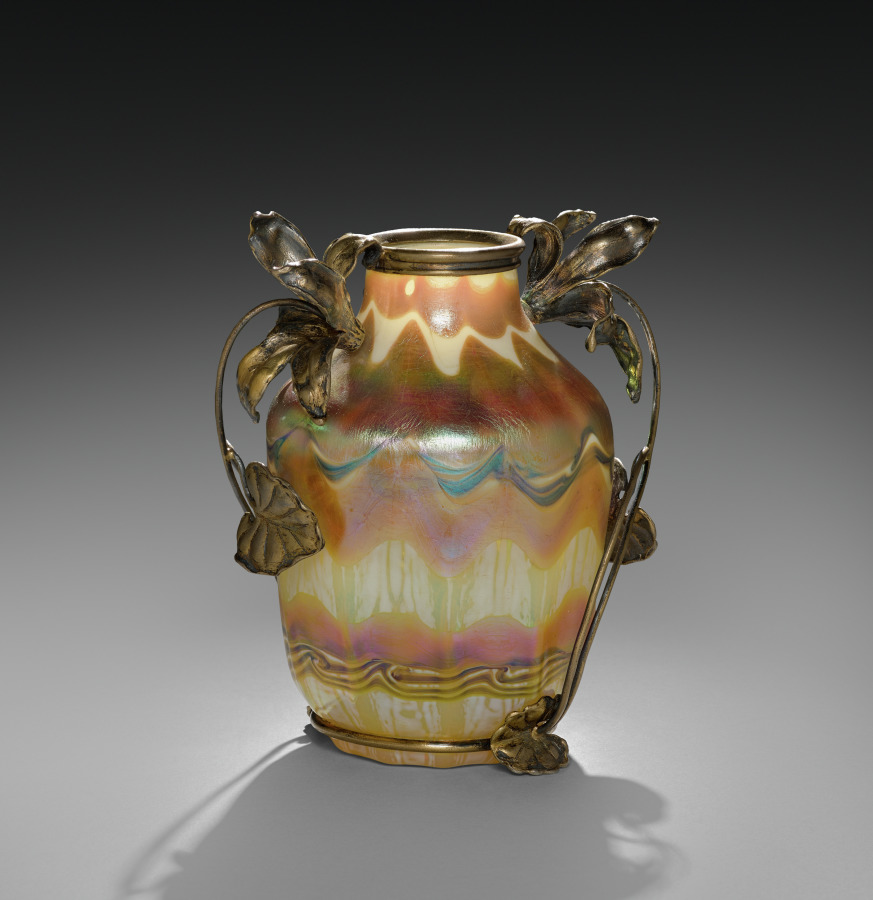
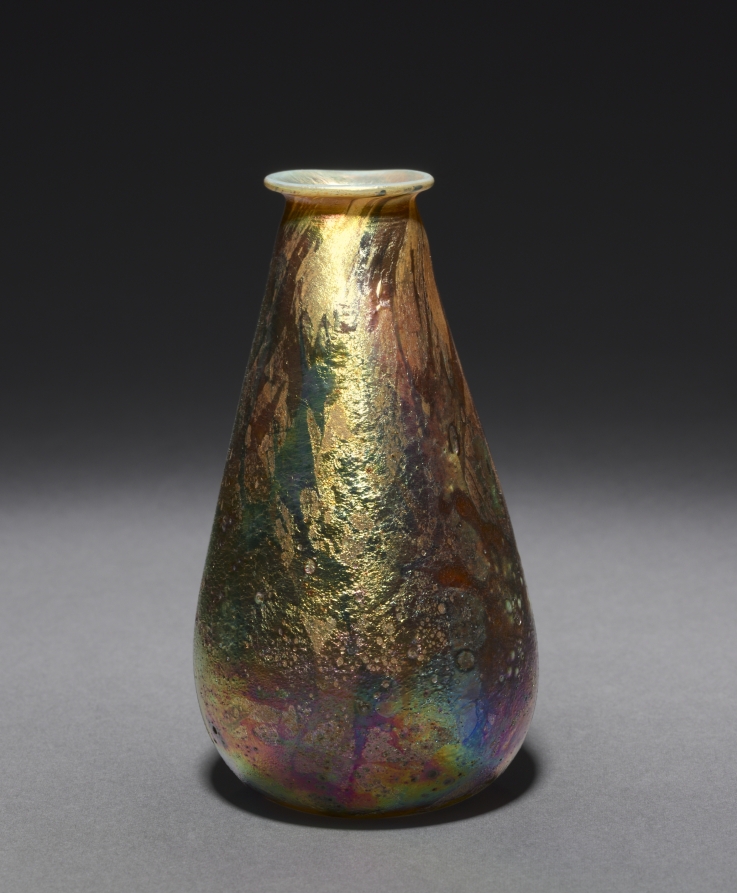
This small vase is an example of Louis Comfort Tiffany's signature Favrile glass. It was made in the style of ancient glass from Cyprus that Tiffany had admired for the iridescent color and encrusted texture of the surface caused by oxidation while buried for many years. Tiffany had noticed these qualities in ancient glass exhibited at the Metropolitan Museum of Art and at his father's store, Tiffany & Co., in New York.
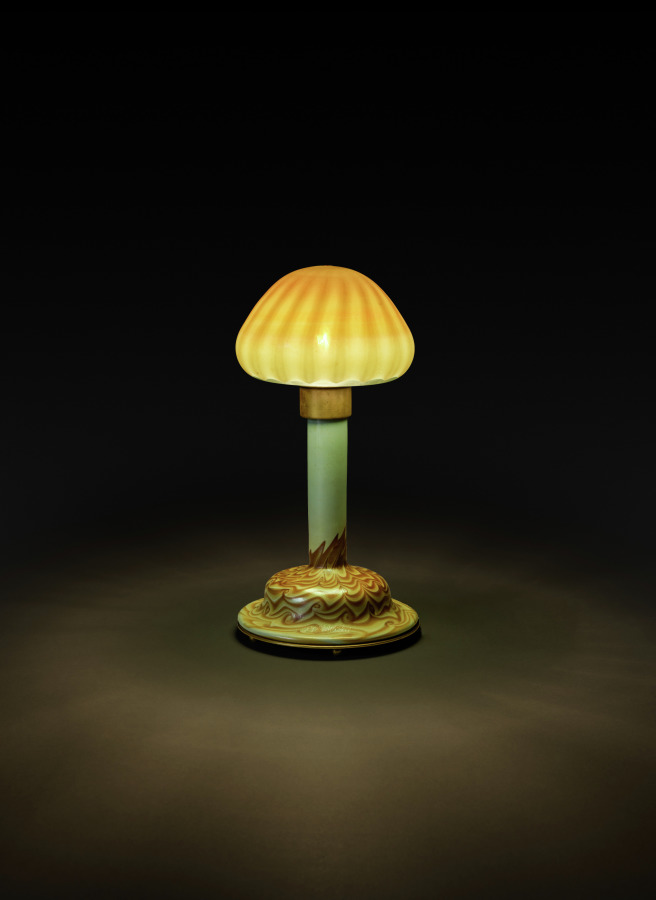
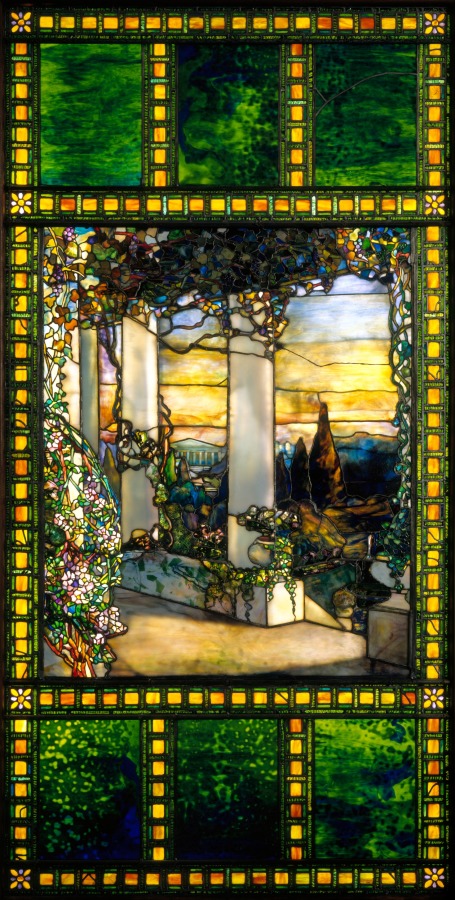
When Tiffany began collaborating with artisans on new types of glass production in the 1880s, his aesthetic ambitions were realized in the development of Favrile glass, deliberately named to sound French, expensive, and “handmade.” Largely through Tiffany's marketing ability, Favrile glass became America’s greatest contribution to the Art Nouveau style. His works were exhibited at international expositions; galleries in major European cities, where his creations were bought by many museums; and in his store in Manhattan, known as the Tiffany Glass and Decorating Co., later Tiffany Studios. From the outset, Tiffany used Favrile glass in mosaic panels, stained glass windows, and his artistic line of table and floor lamps.
When Tiffany began collaborating with artisans on new types of glass production in the 1880s, his aesthetic ambitions were realized in the development of Favrile glass, deliberately named to sound French, expensive, and “handmade.” Largely through Tiffany's marketing ability, Favrile glass became America’s greatest contribution to the Art Nouveau style. His works were exhibited at international expositions; galleries in major European cities, where his creations were bought by many museums; and in his store in Manhattan, known as the Tiffany Glass and Decorating Co., later Tiffany Studios. From the outset, Tiffany used Favrile glass in mosaic panels, stained glass windows, and his artistic line of table and floor lamps.
Provenance
Virginia Hubbell, bequest to the Cleveland Museum of Art (?-1997); The Cleveland Museum of Art (1997-)
Accession Number
1997.300
Medium
favrile glass
Dimensions
Diameter: 6.1 cm (2 3/8 in.); Overall: 11.2 cm (4 7/16 in.)
Classification
Glass
Credit Line
Bequest of Virginia Hubbell