Description
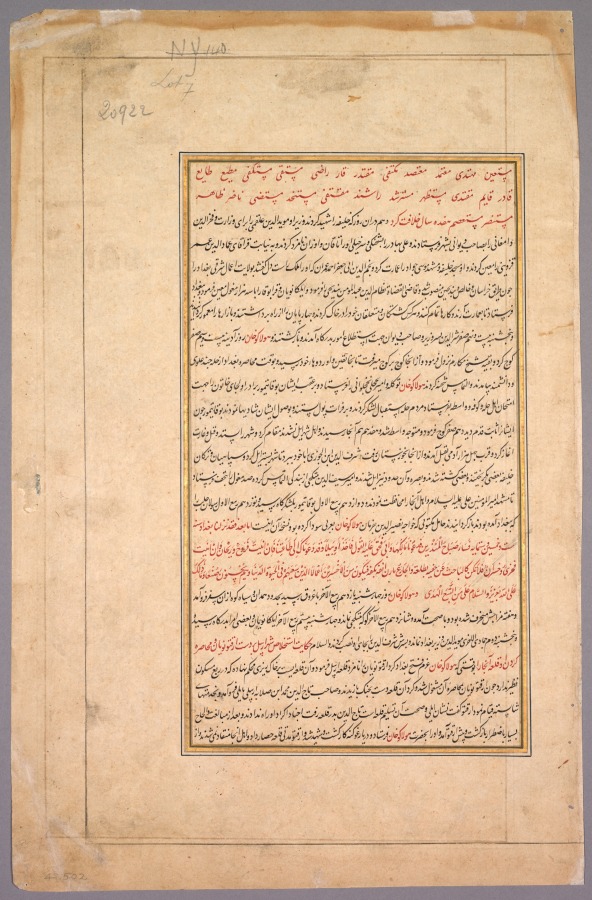
Akbar, the third Mughal emperor of India, commissioned an illustrated copy of the Chingiz-nama, a historical text written in Persian during the early 1300s by a Jewish scholar who converted to Islam. The Chingiz-nama is an account of the conquests of Akbar’s ancestors, the Mongols, who swept across the Asian continent from Siberia to the Mediterranean Sea during the 1200s. This page describes the final momentous defeat of the caliph of Baghdad, the religious head of Sunni Islam and political leader of the Abbasid dynasty, with the names of all the caliphs who came before him listed in red at the top.
Provenance
Demotte; (Heeramaneck Galleries, New York, NY, sold to the Cleveland Museum of Art) (?-1947); The Cleveland Museum of Art, Cleveland, OH (1947-)
Accession Number
1947.502.b
Medium
Gum tempera, ink, and gold on paper
Dimensions
Image: 34 x 20 cm (13 3/8 x 7 7/8 in.); Overall: 38.5 x 25 cm (15 3/16 x 9 13/16 in.); with mat: 49 x 36.3 cm (19 5/16 x 14 5/16 in.)
Classification
Calligraphy
Credit Line
Purchase from the J. H. Wade Fund
Related Artworks
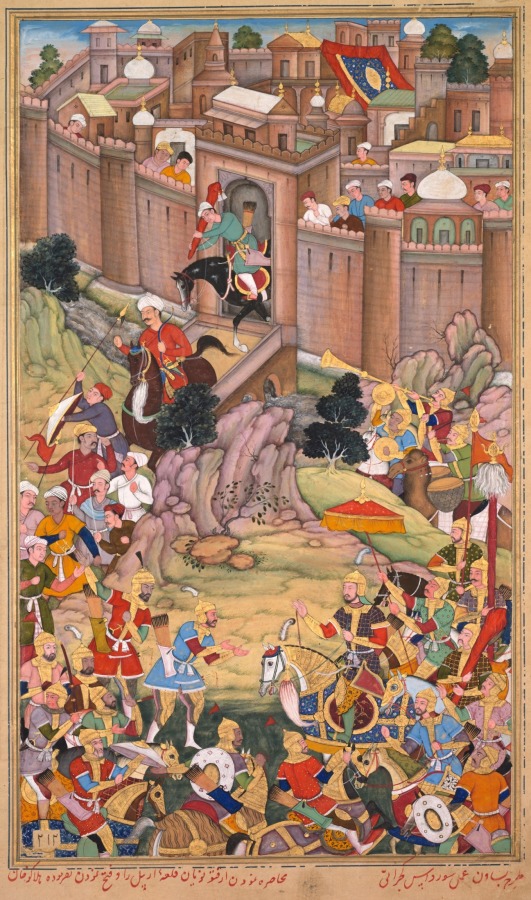
The siege of Arbela in the era of Hulagu Khan, from a Chingiz-nama (Book of Chingiz Khan) of the Jami al-tavarikh (Compendium of Chronicles) of Rashid al-Din (Persian, 1247–1318)
Basavana
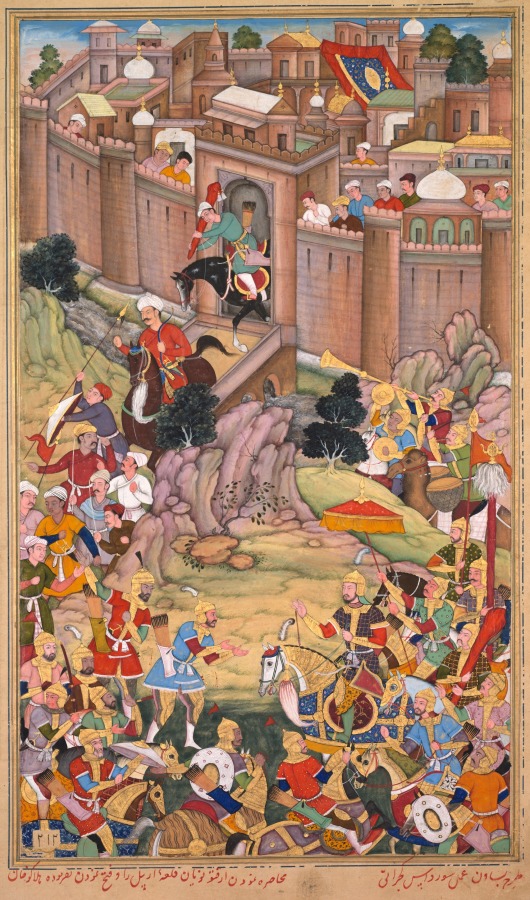
The siege of Arbela in the era of Hulagu Khan, page from a Chingiz-nama (Book of Chingiz Khan) of the Jami al-tavarikh (Compendium of Chronicles) of Rashid al-Din (Persian,1247–1318)
Basavana
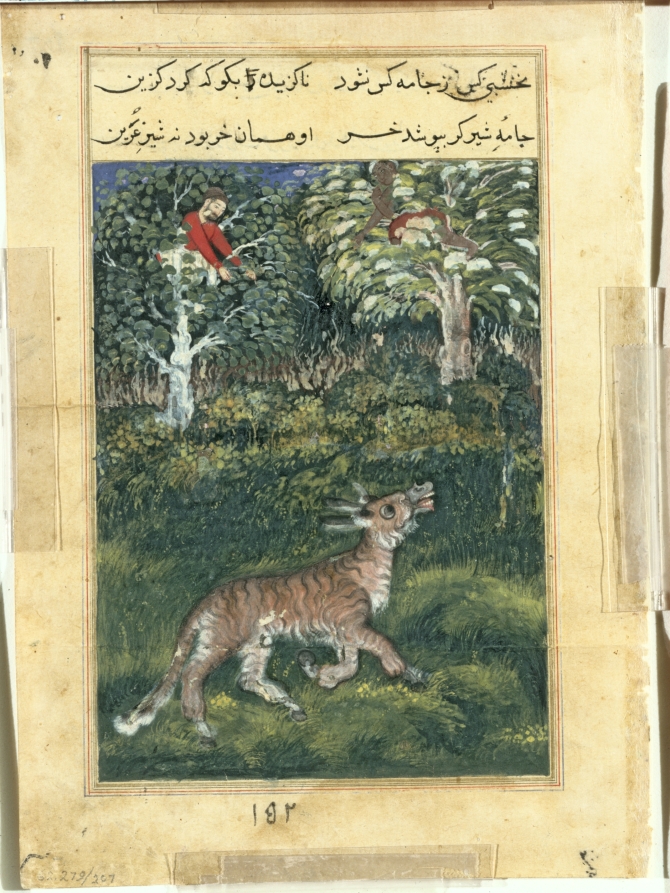
The donkey, in a tiger’s skin, reveals his identity by braying aloud, from a Tuti-nama (Tales of a Parrot): Thirty-first Night
Basavana
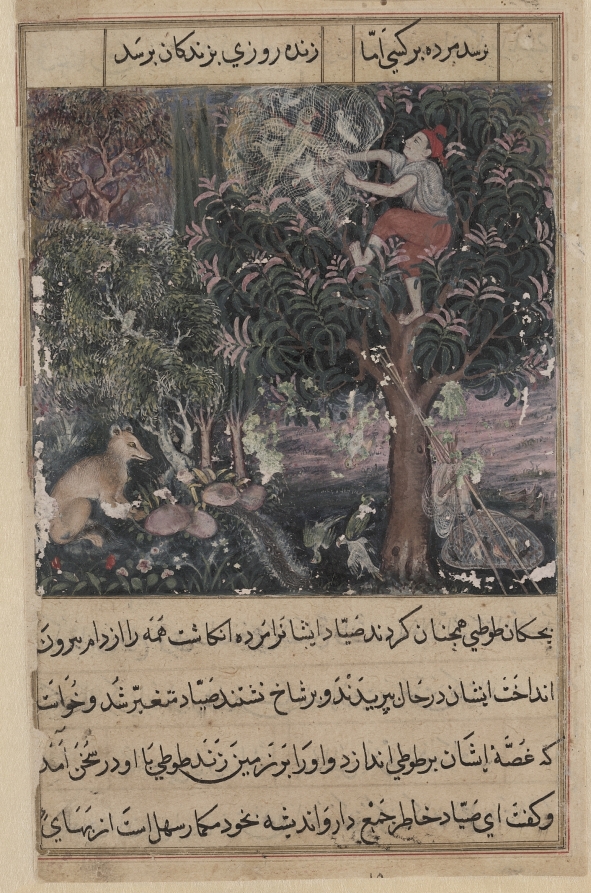
The hunter throws away the baby parrots, who pretend to be dead, and captures the mother, from a Tuti-nama (Tales of a Parrot): Fifth Night
Basavana